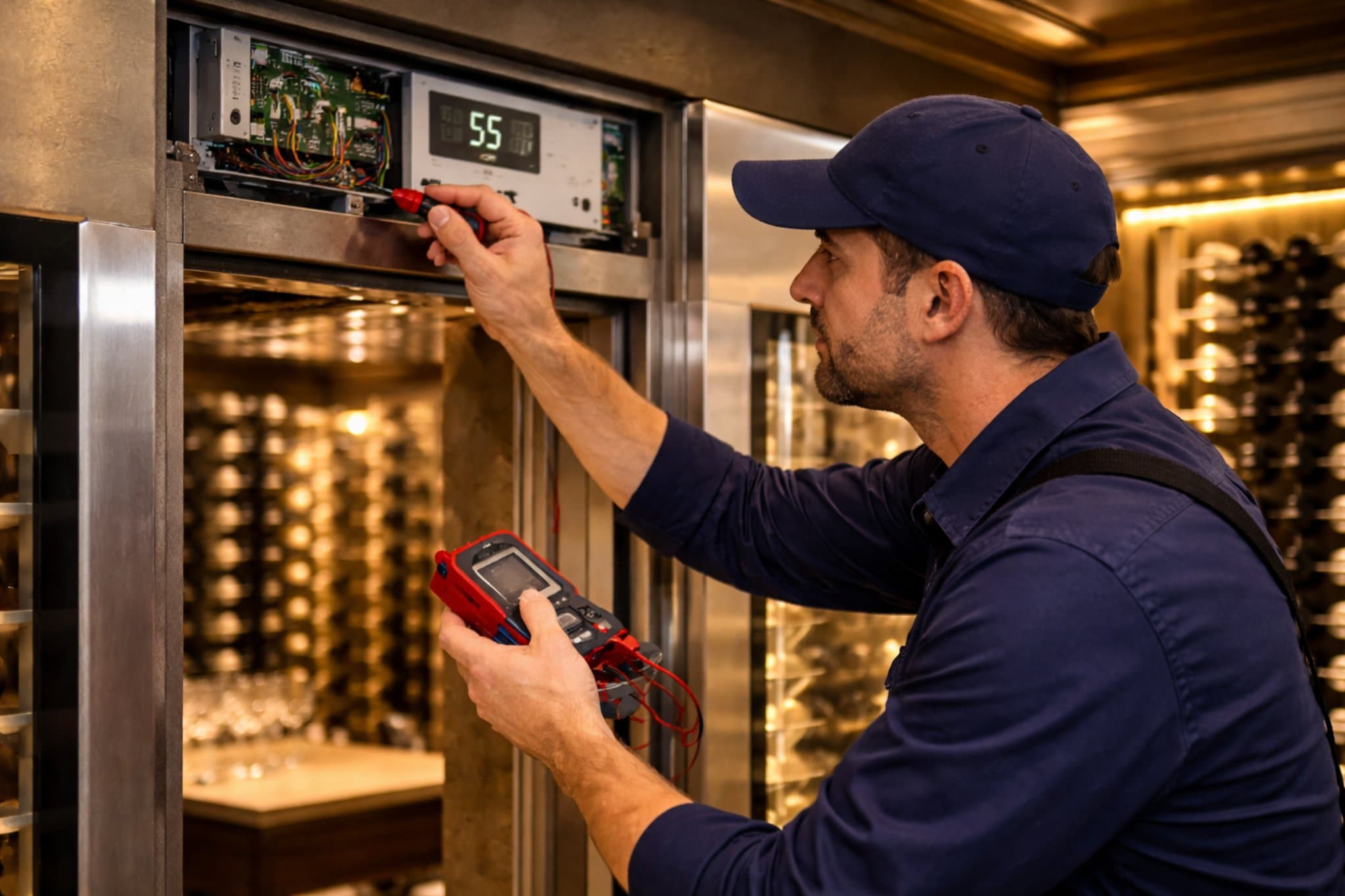
- Service
- Wine chiller repair
- Category
- Cooling & Refrigeration Systems
- Coverage
- South Florida
Common symptoms
Wine chiller not cooling
The unit runs but the temperature doesn’t drop, or it stops cooling entirely—often related to compressor, start relay, control board, or low refrigerant.
Temperature swings
The chiller cycles too warm and too cold, which can be caused by a faulty thermostat/sensor, airflow restriction, or failing refrigeration components.
Warm air or uneven cooling
One area of the cabinet stays warmer than others, typically due to fan issues, blocked vents, or problems within the cooling system.
Excessive frost or ice buildup
Frost on internal coils or around the evaporator may indicate a defrost system failure, restricted airflow, or sensor/thermostat malfunction.
Water pooling or leaks
Moisture inside the unit, under the wine chiller, or around the base can result from clogged drains, defrost issues, or condensation problems.
Loud noise or vibrating operation
Banging, buzzing, rattling, or constant loud running can point to a failing compressor, fan motor, or loose internal components.
Unit runs constantly
If the chiller never reaches or maintains temperature, it may be struggling with condenser performance, refrigerant issues, or a control problem.
Bad odor or spoiled wine risk
Warm temperatures and inconsistent humidity control can affect wine quality and create unpleasant odors from moisture buildup.
Repair process
Confirm the complaint and review recent changes
We start by discussing symptoms (warm cabinet, ice buildup, leaks, noise) and whether the issue began after power fluctuations, cleaning, relocation, or heavy use.
Check power, controls, and temperature settings
Technicians verify outlet power, confirm correct setpoints, and inspect the thermostat/sensor and control functions that govern cooling.
Inspect airflow and internal components
We evaluate fans and vents for obstruction or failure, and check for restricted airflow that can cause warm spots and temperature instability.
Evaluate the refrigeration system performance
We assess compressor operation, condenser function, and related refrigeration components to determine whether the issue is control-related, airflow-related, or a sealed-system problem.
Test and diagnose defrost and drainage systems
For frost/ice or water pooling, we check defrost operation, sensors, and drainage to prevent repeated buildup and moisture damage.
Identify the root cause and recommend the repair
After diagnosis, we explain what’s causing the problem and recommend the appropriate repair—prioritizing reliability and stable wine-safe temperatures.
Perform the repair and verify temperature stability
We complete the repair and then verify cooling performance to ensure the unit maintains consistent temperatures under normal operating conditions.
Final safety and performance checks
We confirm proper operation, check for abnormal sounds or leaks, and advise on best practices to reduce repeat issues in South Florida’s humidity.
Expert Wine chiller repair
Wine Chiller Repair in South Florida (Cooling & Refrigeration Systems)
If your wine chiller isn’t keeping your bottles at the right temperature, you need more than a quick reset—you need a proper diagnosis of the cooling and refrigeration system. In South Florida, heat and humidity can make refrigeration problems show up sooner, especially with units that run frequently or have airflow restrictions.
Whether your chiller is blowing warm air, cycling constantly, developing ice buildup, or leaking moisture, our repair process is designed to restore stable, wine-safe temperatures.
Common Wine Chiller Problems We Repair
Cooling failures and poor temperature control
- Not cooling at all
- Warm cabinet despite running
- Temperature swings that affect wine storage stability
Frost, ice, and defrost-related issues
- Ice on internal coils
- Frost buildup caused by defrost system problems
Moisture and leaks
- Water pooling inside the cabinet
- Condensation or drainage issues
Noises and airflow problems
- Loud buzzing, rattling, or constant compressor/fan operation
- Uneven cooling from fan or airflow restrictions
Our Wine Chiller Repair Process
- Review symptoms and recent changes (power events, cleaning, relocation, or heavy use)
- Check controls and temperature settings to confirm the issue isn’t a misconfiguration
- Inspect airflow and internal fans/vents that can cause uneven cooling
- Diagnose refrigeration system performance (compressor, condenser, and related components)
- Test defrost and drainage systems for frost/ice and water pooling
- Explain the root cause and recommend the repair
- Complete the repair and verify stable temperatures
- Final checks for proper operation and safe performance
Why Temperature Stability Matters for Wine
Wine chillers are designed to maintain consistent cooling and humidity conditions. When the refrigeration system struggles—whether from a failing sensor, airflow restriction, or sealed-system issue—temperatures can fluctuate. That instability can harm wine quality over time and can lead to additional problems like excess condensation or frosting.
Maintenance Tips to Prevent Future Issues (South Florida Ready)
- Keep the condenser and intake areas clean and unobstructed.
- Ensure the unit has adequate clearance for airflow.
- Check the door gasket for gaps or wear.
- Avoid direct sun and heat sources near the unit.
- If you see recurring frost or water pooling, schedule an inspection promptly.
Get Wine Chiller Repair Help in South Florida
If your wine chiller isn’t maintaining the temperature you need, contact a cooling & refrigeration specialist for diagnosis and repair. We’ll help restore reliable performance so your wine stays protected.
Maintenance tips
Frequently Asked Questions
How do I know if my wine chiller needs repair or replacement?
Repair is typically recommended when the unit can be diagnosed to a specific component issue (thermostat/sensor, fan, defrost system, airflow restriction, or a failing relay). Replacement may be considered if multiple major sealed-system components are failing or if the unit cannot maintain safe, stable temperatures after repair.
Why does my wine chiller get warm even though it’s running?
Common causes include failing compressor components, low refrigerant, a defective thermostat/sensor, restricted airflow, or condenser performance issues—each can prevent the unit from achieving and maintaining set temperature.
What causes ice or frost inside a wine cooler?
Ice buildup often points to defrost system failure, a faulty defrost sensor/timer, or blocked airflow that prevents proper temperature regulation and defrost cycles.
Is water inside the unit normal?
Some condensation can occur, but standing water or frequent pooling usually indicates a drainage or defrost problem, excess humidity, or a blocked drain line that should be inspected.
Can South Florida humidity affect my wine chiller?
Yes. High humidity can increase condensation and stress refrigeration components. Proper ventilation, clean condenser areas, and a tight door seal help the unit maintain stable performance.
How long does wine chiller repair usually take?
Timing depends on diagnosis and parts availability. After inspection, the technician can provide an estimated repair timeline based on the specific cause.
Need wine chiller repair support?
Use the contact route to request service, diagnostics, or to clarify whether the issue fits residential or commercial workflows.