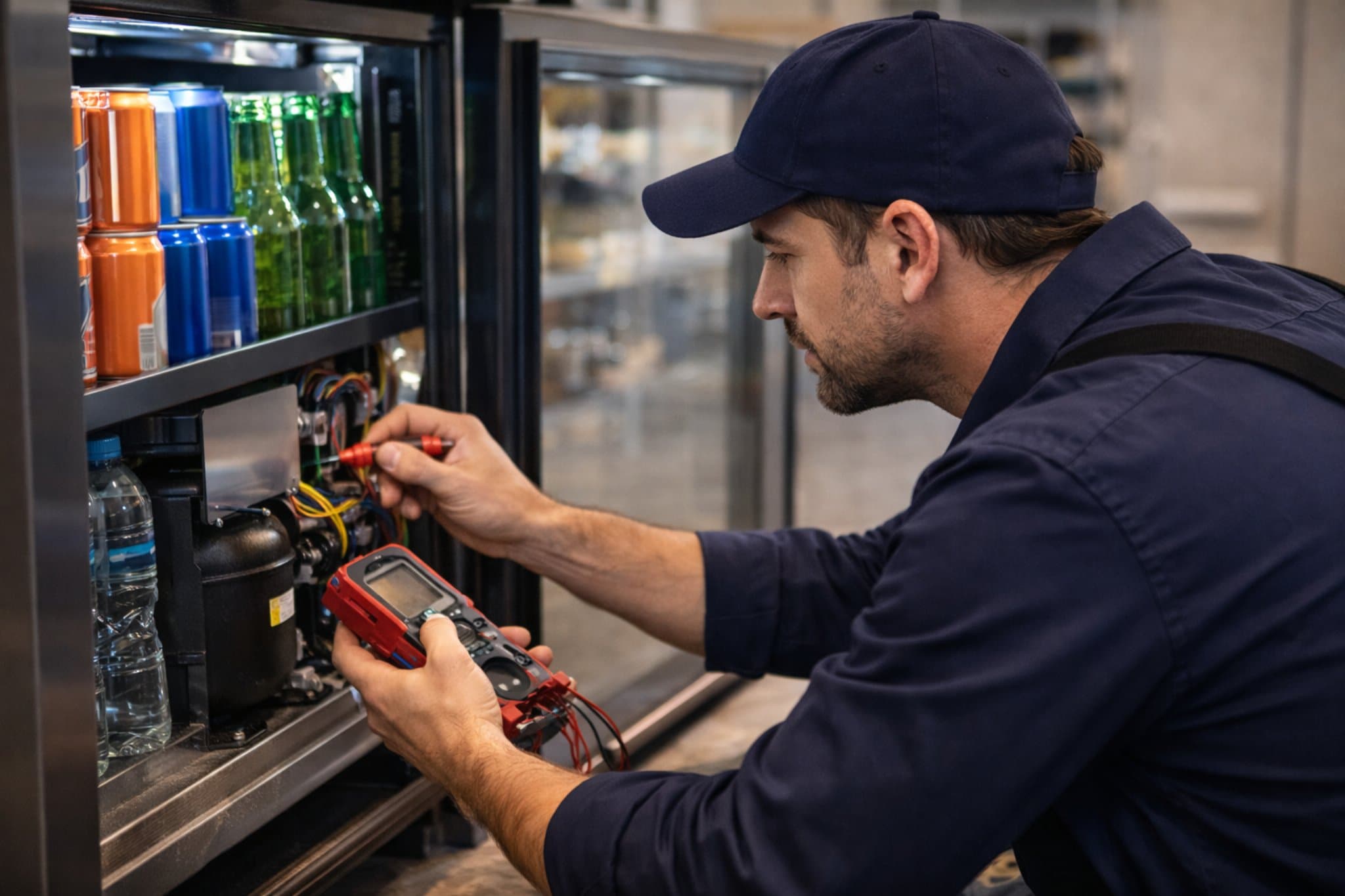
- Service
- Walk-in cooler repair
- Category
- Cooling & Refrigeration Systems
- Coverage
- South Florida
Common symptoms
Warm or uneven temperatures
The cooler won’t reach the set temperature, or certain areas run warmer than others—often caused by airflow issues, faulty controls, or failing components.
Frequent cycling or compressor issues
The unit short-cycles, runs constantly, or struggles to start—signs of thermostat/sensor problems, refrigerant issues, or compressor-related faults.
Ice buildup on coils or evaporator
Excess frost can block airflow and force the system to overwork, frequently tied to defrost system problems or restricted airflow.
Water pooling inside or around the cooler
Condensation or leaks can occur from clogged drains, failed heaters, or refrigerant-related issues that require prompt attention.
Strange noises from the unit
Grinding, rattling, buzzing, or loud fan/compressor sounds may indicate worn bearings, loose components, or failing motors.
Poor airflow or frozen fan blades
Weak circulation can lead to temperature swings and spoilage risk; frozen or damaged fans often require repair or replacement.
Refrigerant leaks or oily residue
A visible leak, hissing, or oily spots near lines and fittings can reduce cooling performance and create safety concerns.
Control panel errors or inaccurate readings
Fault codes, incorrect temperature display, or unresponsive controls can point to sensors, relays, or electronic control board failures.
Repair process
1) Quick assessment and temperature verification
Technicians check current temperatures, airflow, and system operation to confirm the complaint and identify likely causes.
2) Inspect key components
A thorough inspection focuses on evaporator/fan operation, condenser performance, defrost function, drain system, wiring, and controls.
3) Diagnose the root cause
We test sensors, relays, motors, and refrigeration performance indicators to determine what’s failing and why.
4) Repair and restore stable cooling
Repairs may include fixing airflow issues, restoring defrost operation, repairing leaks, replacing defective parts, or correcting control problems.
5) Test and calibrate for accurate setpoints
After repairs, the system is monitored to ensure stable temperatures and correct cycling behavior.
6) Confirm safe operation for food storage
We verify proper operation so your walk-in cooler can reliably protect product quality and meet food safety expectations.
Expert Walk-in cooler repair
Walk-In Cooler Repair in South Florida (Cooling & Refrigeration Systems)
When your walk-in cooler isn’t holding temperature, product safety is at risk—and downtime can quickly add up. Cooling & Refrigeration Systems delivers professional walk-in cooler repair for commercial kitchens, restaurants, and grocery operations across South Florida.
Whether your cooler is running warm, freezing up, or leaking water, our team focuses on fast diagnosis and correct repairs so your refrigeration system can return to stable, dependable performance.
Common Walk-In Cooler Problems We Repair
Walk-in coolers rely on consistent airflow, proper defrosting, and correct refrigeration operation. If any part of that system fails, you may see:
- Warm or uneven temperatures inside the cooler
- Temperature swings that affect food quality and safety
- Ice buildup on evaporator coils
- Water pooling inside or around the unit
- Strange noises from fans, motors, or the compressor area
- Fault codes or inaccurate temperature readings
Our Repair Process (What to Expect)
- Assessment & temperature verification to confirm the issue and scope the problem.
- Inspection of key components, including fans, evaporator/condenser performance, defrost operation, and controls.
- Diagnosis of the root cause using practical testing and system checks.
- Repairs to restore cooling performance, whether it’s a control issue, airflow problem, defrost failure, or refrigeration component repair.
- Testing and monitoring to ensure the cooler reaches and maintains setpoints.
- Confirmation of safe operation for ongoing food storage.
Why South Florida Walk-In Coolers Need Prompt Service
South Florida’s humidity and heat can stress refrigeration systems—especially during busy service periods. Small issues like airflow restrictions, sensor drift, or partial defrost failures can escalate faster in warmer conditions. Addressing symptoms early helps prevent larger breakdowns and product loss.
Maintenance Tips to Reduce Breakdowns
- Keep door seals/gaskets in good condition.
- Reduce unnecessary door openings.
- Keep airflow paths clear and ensure vents aren’t blocked.
- Watch for early warning signs: temperature drift, ice, water pooling, and unusual sounds.
- Schedule periodic inspections for commercial refrigeration performance.
Get Walk-In Cooler Repair Help Today
If your walk-in cooler is struggling to maintain safe temperatures, Cooling & Refrigeration Systems can help. Contact us for walk-in cooler repair in South Florida and get your refrigeration system back to reliable operation.
Maintenance tips
Frequently Asked Questions
How do I know if my walk-in cooler needs repair or just maintenance?
If you notice warm spots, temperature swings, ice buildup, water pooling, repeated cycling, error codes, or unusual noises, it’s usually more than routine maintenance. Those symptoms often indicate a component or control issue that requires diagnosis.
What causes temperature fluctuations in a walk-in cooler?
Common causes include airflow problems (fan or vent restrictions), failing sensors or thermostats, defrost system issues, refrigerant leaks, dirty coils, or blocked condensate drains.
Can a walk-in cooler still run if there’s a refrigerant leak?
Yes, it may still run but typically with reduced cooling capacity. Over time, leaks can cause the system to short-cycle, run longer than normal, or struggle to maintain set temperatures—often leading to ice buildup or inconsistent cooling.
Why does my cooler freeze up or build ice on the coils?
Ice buildup is frequently linked to defrost system failures, restricted airflow, or sensor/control problems. When frost blocks airflow, the unit can’t cool properly and may worsen quickly.
How quickly should I address a water leak inside the cooler?
As soon as you notice it. Water pooling can damage interior surfaces, create sanitation issues, and indicate a clogged drain, failed heater, or other refrigeration-related problem.
Do you service commercial walk-in coolers for restaurants and grocery stores in South Florida?
Yes. Cooling & Refrigeration Systems provides walk-in cooler repair for commercial foodservice and retail environments throughout South Florida, with a focus on restoring reliable temperature control.
Need walk-in cooler repair support?
Use the contact route to request service, diagnostics, or to clarify whether the issue fits residential or commercial workflows.