- Service
- Leak detection & repair
- Category
- Emergency Services
- Coverage
- South Florida
Common symptoms
Visible water pooling
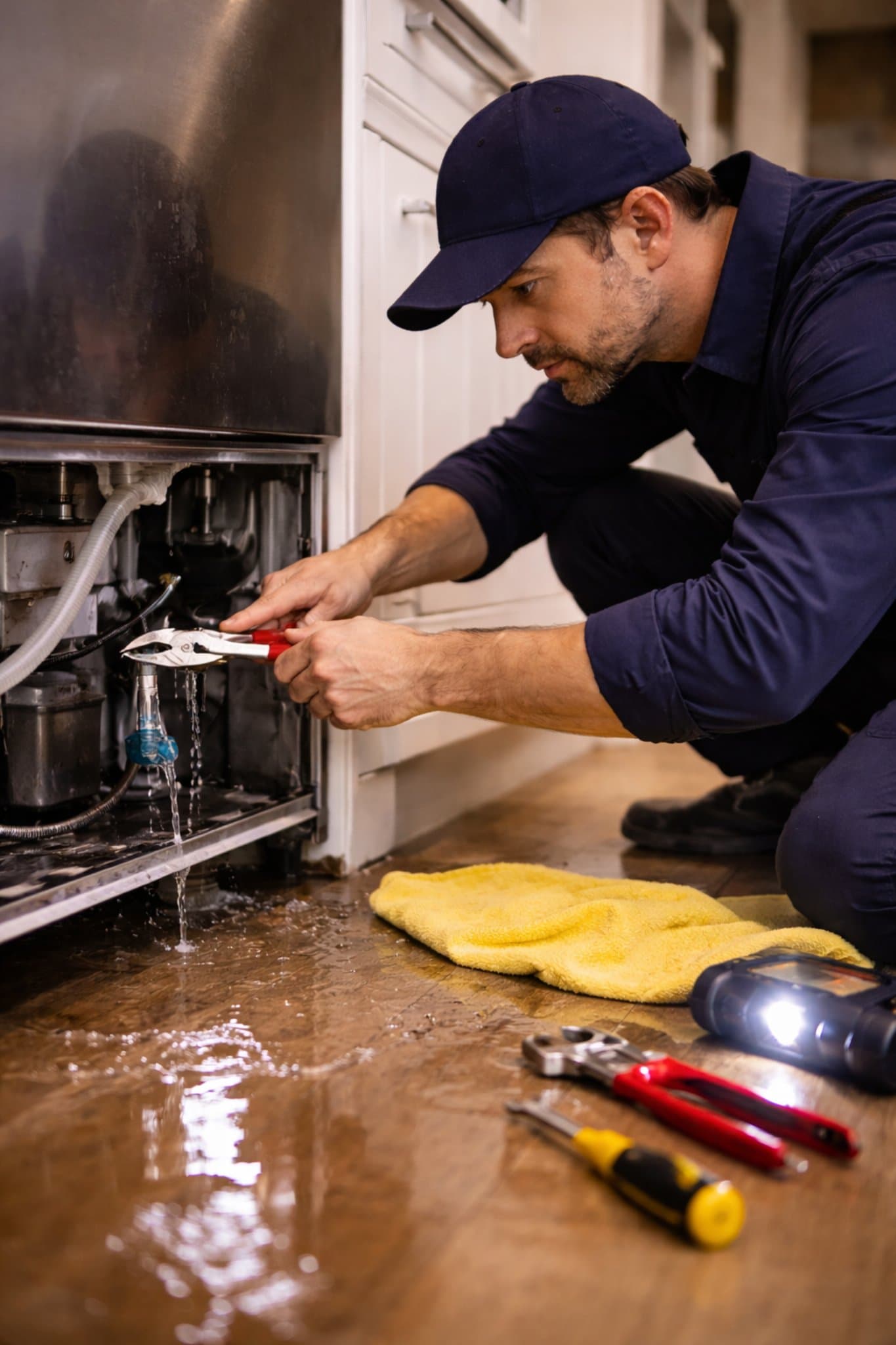
Water appears under or beside the appliance, on flooring, or inside nearby cabinets.
Intermittent leaking
Leak only happens during certain cycles, after ice making, or when water is actively flowing.
Musty smell or swelling
Moisture may cause odors, warped floors, soft baseboards, or cabinet swelling around the appliance.
Appliance shuts down or alerts
Some appliances stop working, show a leak alert, or refuse to run after detecting moisture.
Drip lines or wet connections
Water may be coming from inlet hoses, drain lines, filters, valves, or rear connections.
Repair process
1. Make the area safe
If water is near outlets or the appliance is sparking, stop use immediately and avoid stepping into standing water.
2. Shut off supply if accessible
Turn off the appliance water supply or the main supply if needed and safe to reach.
3. Check visible sources
Look for loose hoses, damaged fittings, clogged drains, cracked tubs, or water at the back or bottom of the unit.
4. Dry and protect the area
Remove standing water, place towels or a shallow container if appropriate, and protect floors and nearby cabinets.
5. Schedule leak detection and repair
Have the appliance inspected to locate the source, confirm whether parts need repair or replacement, and restore safe operation.
Why quick leak response matters
A small appliance leak can become a major problem quickly. Water can spread under flooring, into cabinets, and behind walls, creating damage that is harder to find and more expensive to address later. Fast troubleshooting also helps reduce electrical and slip hazards.
Common appliance leak sources
Leaks often come from supply hoses, inlet valves, drain lines, pumps, door seals, clogged filters, ice maker lines, or cracked internal components. In some cases, the leak only appears while the appliance is running, making diagnosis harder without careful inspection.
South Florida leak issues to watch
Homes in South Florida often have appliances in tight laundry areas, cabinets, or spaces where moisture can go unnoticed. Humidity can also make it harder to spot ongoing leaks, so early signs like swelling wood, odors, or repeated dampness should be taken seriously.
What leak detection and repair usually involves
Service typically starts with identifying where the water is coming from, then checking the appliance connections, seals, drains, and related components. Once the source is found, the next step is to repair or replace the faulty part and verify that the leak has stopped.
Maintenance tips
Frequently Asked Questions
What should I do first if my appliance is leaking?
If it is safe, turn off the water supply to the appliance and stop using it. Then dry the area and arrange leak detection as soon as possible.
Can a small leak really cause serious damage?
Yes. Even a slow drip can damage flooring, cabinets, baseboards, and surrounding structures if it goes unnoticed.
Which appliances commonly need leak repair?
Refrigerators with water or ice lines, dishwashers, washing machines, ice makers, and other water-connected appliances are common sources of leaks.
Why is the leak hard to find?
Some leaks only happen during specific cycles, under pressure, or when a hidden hose or internal component fails. Water may travel away from the actual source before it becomes visible.
Do you serve nearby South Florida neighborhoods?
Yes. This service page covers Kendall, Pinecrest, Palmetto Bay, Cutler Bay, South Miami, and Coral Gables.
Related locations
Need leak detection & repair support?
Use the contact route to request service, diagnostics, or to clarify whether the issue fits residential or commercial workflows.