- Service
- Freezer repair
- Category
- Residential Appliance Repair
- Coverage
- South Florida
Common symptoms
Freezer not cooling properly
Food thaws or the unit struggles to maintain the correct temperature.
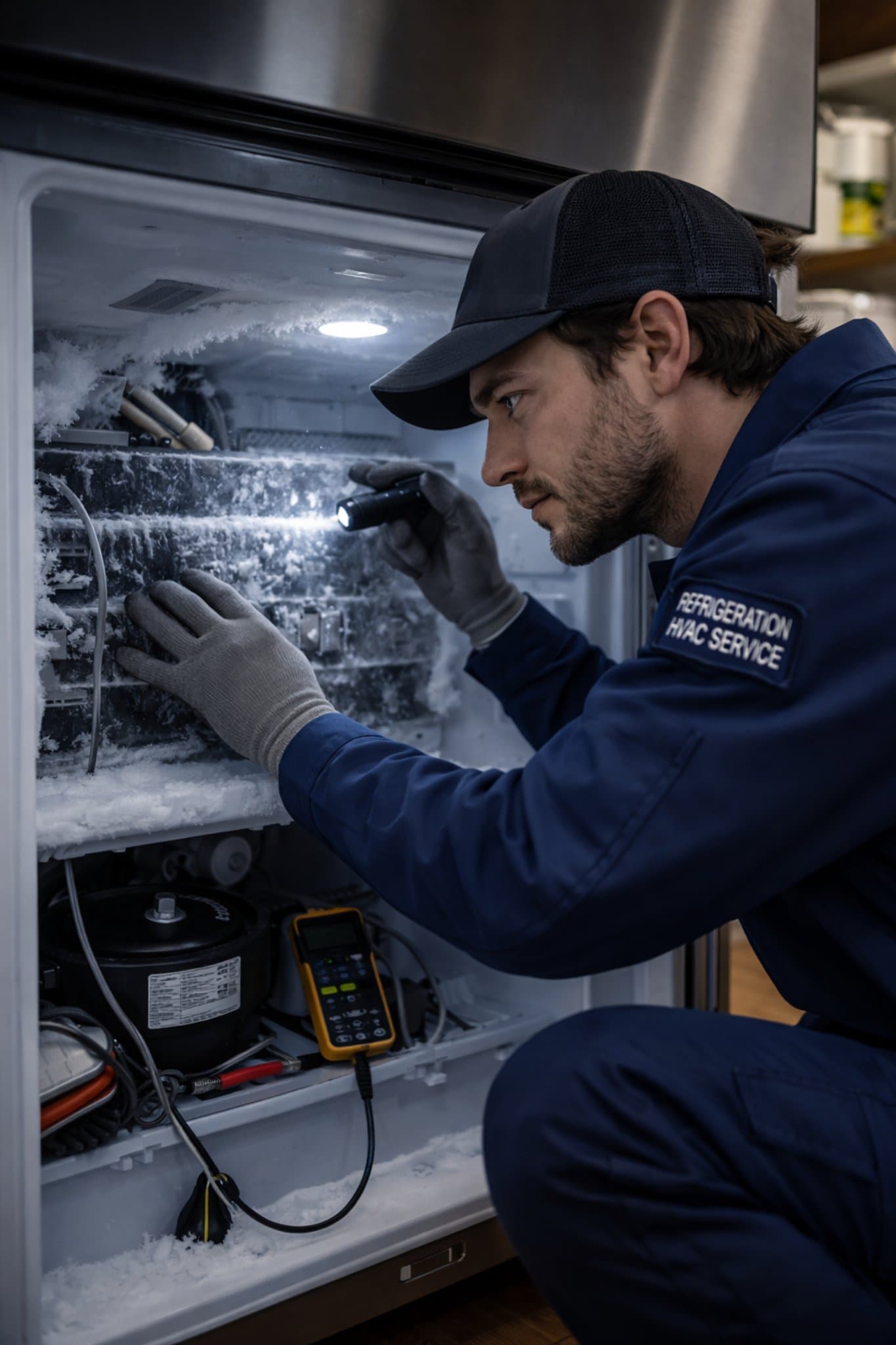
Excessive frost or ice buildup
Frost accumulates on the back wall, vents, or inside the freezer, reducing airflow.
Warm air or inconsistent temperatures
The freezer temperature swings, causing some items to freeze while others soften.
Strange noises (buzzing, clicking, rattling)
Unusual sounds may indicate a failing compressor, fan, or relay components.
Freezer runs nonstop
The compressor may keep cycling without reaching the set temperature.
Ice maker or water issues (if applicable)
Reduced ice production, clumped ice, or leaks can be related to temperature or supply problems.
Defrost problems
Signs include no defrosting, persistent frost, or water pooling where it shouldn’t.
Error codes or control panel malfunctions
Display errors or unresponsive controls can point to sensor or control board faults.
Repair process
1) Quick scheduling & on-site assessment
We review your symptoms, recent changes, and how the freezer is behaving before beginning diagnostic testing.
2) Temperature & airflow checks
We verify thermostat/control settings, inspect air vents, and confirm whether cold air is circulating correctly.
3) Defrost system inspection
We test key defrost components to identify causes of frost buildup, poor cooling, or water/ice issues.
4) Compressor, fan, and electrical testing
We check for signs of compressor, evaporator fan, capacitor/relay, and electrical supply problems.
5) Identify the root cause & explain options
After diagnosis, we explain what’s failing, why it’s happening, and the most practical repair path.
6) Perform the repair & verify performance
We complete the repair and then confirm temperature stability, airflow, and proper operation.
7) Final walkthrough & care guidance
We review what was fixed and provide tips to help your freezer run efficiently going forward.
Expert Freezer repair
<h2>Freezer Repair for South Florida Homeowners</h2> <p>When your freezer stops cooling, builds up excessive frost, or can’t maintain a steady temperature, food safety becomes a real concern. Our residential freezer repair service in South Florida focuses on accurate diagnostics and dependable repairs for common cooling and defrost failures.</p> <h3>Common Freezer Problems We Repair</h3> <ul> <li><strong>Not cooling properly</strong> or struggling to reach the set temperature</li> <li><strong>Excessive frost/ice buildup</strong> that blocks airflow</li> <li><strong>Warm or inconsistent temperatures</strong> inside the freezer</li> <li><strong>Strange noises</strong> such as clicking, buzzing, or rattling</li> <li><strong>Freezer runs nonstop</strong> without cycling normally</li> <li><strong>Defrost issues</strong> that prevent the unit from clearing ice</li> <li><strong>Error codes or control malfunctions</strong> (on compatible models)</li> </ul> <h3>What Causes Freezer Failures?</h3> <p>Freezer issues are often tied to the refrigeration cycle, airflow, or the defrost system. In many cases, problems come from components like the defrost heater, defrost thermostat/sensor, evaporator fan, temperature control, or electrical parts that regulate compressor operation. A proper diagnosis is key—guesswork can lead to unnecessary repairs.</p> <h3>Our Residential Freezer Repair Process</h3> <ol> <li><strong>Assessment & symptom review:</strong> We start by understanding what you’re seeing and how the freezer has been behaving.</li> <li><strong>Temperature and airflow checks:</strong> We confirm whether cold air is moving properly and whether controls are responding.</li> <li><strong>Defrost system inspection:</strong> We test for the root cause of frost buildup and defrost failure.</li> <li><strong>Electrical & component testing:</strong> We evaluate fans, compressor-related components, and relevant electrical parts.</li> <li><strong>Repair and verification:</strong> After fixing the issue, we verify stable operation and cooling performance.</li> </ol> <h3>Why Timely Freezer Repair Matters</h3> <p>A freezer that can’t hold temperature may lead to spoiled food and wasted groceries. Addressing cooling or defrost problems early can help prevent additional strain on the compressor and reduce the risk of more expensive failures.</p> <h3>Maintenance Tips to Help Prevent Future Issues</h3> <ul> <li>Keep vents clear and avoid overpacking that blocks airflow.</li> <li>Wipe and inspect the door gasket; replace if it’s cracked or not sealing.</li> <li>Limit door opening time to reduce warm-air intrusion.</li> <li>Watch for early frost buildup and have it checked before it worsens.</li> </ul> <h3>Need Freezer Repair in South Florida?</h3> <p>If your freezer isn’t cooling correctly, is frosting up, or is making unusual noises, request a service visit. We’ll diagnose the cause and help restore reliable freezing performance for your home.</p>Maintenance tips
Frequently Asked Questions
How do I know if my freezer needs repair or replacement?
Repair is often the best option when the unit can still cool but has a specific failing component (like a defrost part, fan, thermostat, or sensor). If the freezer repeatedly fails to maintain temperature, has major compressor issues, or requires multiple repairs, a technician can help you compare repair vs. replacement based on diagnosis and condition.
Why is my freezer frosting up even though the temperature seems set correctly?
Frost buildup is commonly linked to defrost system problems (defrost heater, thermostat, control board, or related components). When defrost doesn’t function properly, ice accumulates and blocks airflow—leading to inconsistent temperatures.
What causes a freezer to run nonstop?
A nonstop run can be caused by a faulty thermostat/control, a weak seal letting warm air in, restricted airflow, or compressor-related issues. A diagnostic check helps determine the exact cause.
My freezer makes clicking or buzzing noises—should I be concerned?
Some sounds are normal, but persistent clicking, buzzing, or rattling can indicate relay/capacitor issues, a failing fan, or other electrical or mechanical problems. It’s best to have it checked to prevent further damage.
Do you repair both freezers and refrigerator-freezer combos?
Yes—residential freezer repair can include standalone freezers and freezer sections of refrigerator-freezer units, depending on the issue and model. A technician can confirm what can be serviced after inspection.
How quickly can you diagnose the problem?
Diagnosis timing depends on the symptoms and model, but a technician typically performs on-site checks to identify temperature, airflow, defrost, and electrical causes. Complex issues may require additional testing.
Need freezer repair support?
Use the contact route to request service, diagnostics, or to clarify whether the issue fits residential or commercial workflows.