- Service
- Dryer repair
- Category
- Residential Appliance Repair
- Coverage
- South Florida
Common symptoms
Dryer runs but won’t heat
Clothes stay damp or cool after a full cycle, often linked to heating element, thermal fuse, thermostat, or gas valve issues.
Dryer tumbles but dries slowly
Long drying times may indicate clogged lint screens/ducts, restricted airflow, faulty moisture sensors, or improper venting.
Dryer shuts off mid-cycle
Intermittent shutdown can be caused by overheating, blocked vents, a failing thermal fuse, or cycling thermostat problems.
Loud banging, squealing, or grinding noises
Unusual sounds may point to worn drum support rollers, idler pulley, belt wear, or a loose component.
Drum not turning / won’t tumble
If the dryer motor runs but the drum doesn’t rotate, common causes include a broken belt, faulty drive motor, or seized rollers.
Burning smell or overheating
A hot or burning odor can signal lint buildup, electrical issues, or failing components that require immediate attention.
Clothes not drying evenly
Wet spots or uneven drying can be related to airflow problems, incorrect settings, or sensor/thermostat faults.
Gas dryer ignition problems (if applicable)
For gas models, issues like failure to ignite or weak flame can be related to igniters, sensors, or gas valve components.
Repair process
1) Quick diagnostic during service
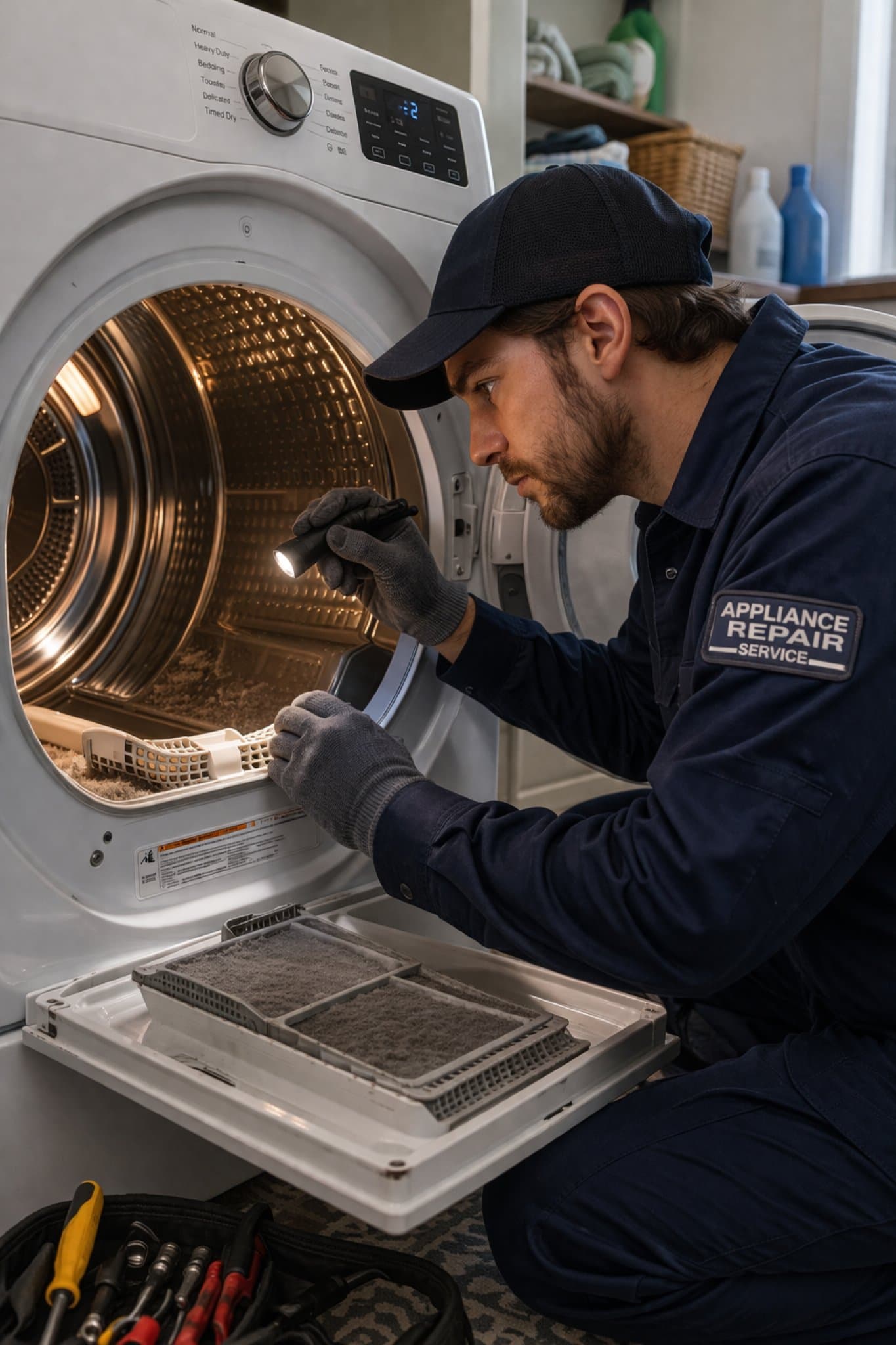
We inspect the dryer’s operation, check airflow and venting pathways, and identify the likely cause based on symptoms.
2) Safety checks first
Technicians verify safe operation, including heat system function, electrical connections, and signs of overheating or lint buildup.
3) Test key components
We test the relevant parts (for example: heating element, thermostats, thermal fuse, drive belt/rollers, moisture sensors, or gas ignition components).
4) Repair or replace the failed part
We complete the repair using appropriate components and confirm the dryer performs correctly through a functional test cycle.
5) Verify airflow and venting performance
For poor drying or overheating concerns, we evaluate lint screen/duct restrictions and recommend improvements to airflow.
6) Customer walkthrough and prevention tips
We explain what caused the issue and share simple steps to help prevent repeat problems and improve drying efficiency.
Expert Dryer repair
Dryer Repair (Residential Appliance Repair) in South Florida
If your residential dryer isn’t performing the way it should, you need a dependable repair service that can diagnose the real cause—not just the symptom. In South Florida, dryer problems are often tied to airflow restrictions, worn mechanical parts, or heating system failures. Whether your dryer is not heating, drying slowly, making loud noises, or stopping mid-cycle, our residential dryer repair helps restore safe, efficient operation.
Common Dryer Problems We Fix
- No heat / weak heat: clothes come out damp or cool
- Slow drying: longer cycles than usual
- Overheating or shutdown: dryer turns off during the cycle
- Drum won’t tumble: belt/roller or drive issues
- Strange noises: squealing, grinding, or banging sounds
- Burning smells: possible overheating or electrical/vent concerns
- Gas dryer ignition issues: failure to ignite or inconsistent flame
What to Expect From Our Repair Process
- Diagnostic inspection to identify the root cause
- Safety checks for heat and electrical performance
- Component testing (heating, thermostats, thermal safety devices, drive system, sensors, and—if applicable—gas ignition parts)
- Repair or replacement of the failed component
- Airflow/vent verification to address poor drying and overheating risks
- Testing and walkthrough so you know the fix is working
Why Dryer Venting Matters in South Florida
Dryers depend on proper airflow to dry efficiently and to prevent overheating. Lint buildup and restricted ducts can lead to slow drying, repeated shutdowns, and even safety hazards. If your dryer has been running longer than normal, it may be time to evaluate the vent path and airflow performance.
Maintenance Tips to Help Prevent Repeat Issues
- Clean the lint screen before every load
- Remove lint from the screen housing area periodically
- Avoid overloading the dryer to maintain airflow
- Keep ducts uncrushed and as short as possible
- Wipe moisture sensor bars (if equipped) to improve drying accuracy
Schedule Dryer Repair in South Florida
Don’t wait until the problem gets worse. If your dryer is showing warning signs—like no heat, loud noises, or burning odors—contact a residential appliance repair professional in South Florida for fast, reliable service.
Maintenance tips
Frequently Asked Questions
How do I know if my dryer issue is venting or a heating problem?
If the dryer runs but clothes remain cool or damp, it may be a heating issue. If drying takes unusually long, or the dryer feels hot with a shutdown mid-cycle, restricted venting or airflow problems are common. A technician can confirm by checking airflow, heat performance, and related safety components.
Is it safe to keep using a dryer that smells like burning?
No. A burning smell can indicate overheating, electrical issues, or significant lint buildup. Stop using the dryer and schedule service promptly to reduce the risk of damage or fire.
Why does my dryer shut off during the cycle?
Frequent mid-cycle shutdown is often caused by overheating and safety thermostats/thermal fuses, commonly triggered by restricted airflow, clogged vents, or failing heat-related components.
What causes a dryer to make loud noises?
Common causes include worn drum support rollers, an idler pulley, a drive belt, or debris in the drum area. The specific sound pattern helps narrow down the likely part.
Can high humidity in South Florida affect dryer performance?
Humidity can impact drying times, especially if airflow is restricted. However, consistently long drying times are usually due to venting, lint buildup, sensor issues, or component wear—not just weather.
Do you repair both electric and gas dryers?
Yes. Dryer repair services can address both electric and gas dryer issues, including heating, ignition, airflow, and drum/tumbling problems. The technician will diagnose the specific model and symptom cause.
How long does a dryer repair take?
Timing depends on the diagnosis and parts availability. After inspection, a technician can provide an estimated service timeline and confirm the repair plan.
Need dryer repair support?
Use the contact route to request service, diagnostics, or to clarify whether the issue fits residential or commercial workflows.