- Service
- Compressor diagnostics
- Category
- Advanced Diagnostics
- Coverage
- South Florida
Common symptoms
Unit is warm or not cooling well
The compressor may not be circulating refrigerant properly, or another sealed-system or control issue may be preventing normal operation.
Frequent clicking or repeated starting attempts
This can point to a compressor start problem, a bad relay or capacitor, or a compressor that is locking up under load.
Compressor runs but the appliance still struggles to cool
A running compressor does not always mean proper compression; diagnostics can help determine whether performance is weak or if another issue is involved.
Overheating, loud humming, or unusual vibration
These symptoms can indicate excessive strain, internal wear, mounting issues, or electrical start components that need attention.
Short cycling or shutting off unexpectedly
A compressor that starts and stops too often may be reacting to overheating, electrical faults, or control problems.
Repair process
Inspect the symptoms and operating history
The technician reviews how the appliance is behaving, how long the problem has been present, and whether any recent changes were made.
Check electrical start components
Testing may include relays, capacitors, wiring, and control signals to see whether the compressor is getting proper startup support.
Measure compressor operation
The diagnostic process evaluates whether the compressor is drawing power correctly, starting consistently, and producing expected performance.
Review cooling performance and heat exchange
Technicians look at temperature patterns, airflow, condenser conditions, and related components to rule out non-compressor causes.
Explain findings and next-step options
After testing, you receive a plain-language summary of whether the issue appears to be the compressor itself, a related part, or a larger system problem.
What compressor diagnostics cover
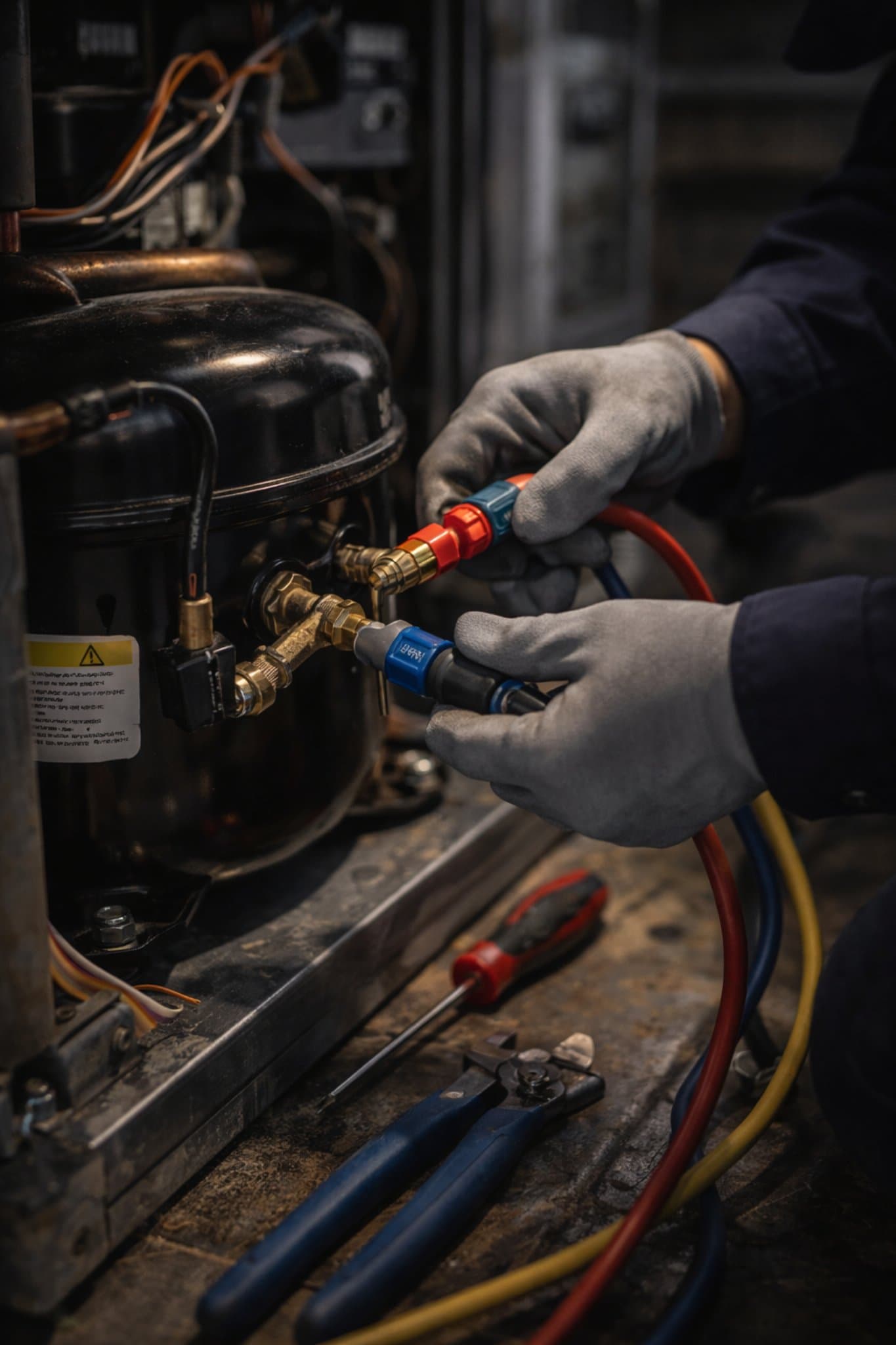
Compressor diagnostics focuses on whether the compressor is starting, running, and cooling as expected. It also checks nearby components that can mimic compressor failure, such as the start relay, capacitor, thermostat, fans, wiring, and control board. This type of service is especially useful when an appliance is not cooling, is making clicking or humming sounds, or is running longer than normal without reaching temperature.
Why accurate diagnosis matters
A compressor can show symptoms that overlap with many other issues. Replacing the wrong part can waste time and may not solve the problem. A proper diagnostic helps determine whether the compressor is truly failing, whether a start component is at fault, or whether the appliance has an airflow, electrical, or sealed-system issue that needs a different fix.
South Florida service area
Appliance Fix Guru provides compressor diagnostics across Kendall, Pinecrest, Palmetto Bay, Cutler Bay, South Miami, and Coral Gables. If your refrigerator or other appliance is showing signs of compressor trouble, a local diagnostic visit can help you understand the issue and plan the right repair path.
Maintenance tips
Frequently Asked Questions
What appliances need compressor diagnostics?
Most often, compressor diagnostics is used for refrigerators and freezers, but similar sealed-system evaluation may apply to other appliances that rely on a compressor for cooling.
Can a clicking sound mean the compressor is bad?
It can, but clicking is also common with a faulty start relay, capacitor, or electrical issue. Diagnostics are needed to determine the real cause.
Does a running compressor always mean the appliance is cooling properly?
No. A compressor can run while the appliance still fails to cool correctly due to weak performance, airflow issues, or another component problem.
What if the compressor is not the problem?
If diagnostics point to another part, the technician can explain the likely cause so you can move forward with the correct repair instead of replacing the compressor unnecessarily.
Do you service my area in South Florida?
Service is available in Kendall, Pinecrest, Palmetto Bay, Cutler Bay, South Miami, and Coral Gables.
Related locations
Need compressor diagnostics support?
Use the contact route to request service, diagnostics, or to clarify whether the issue fits residential or commercial workflows.