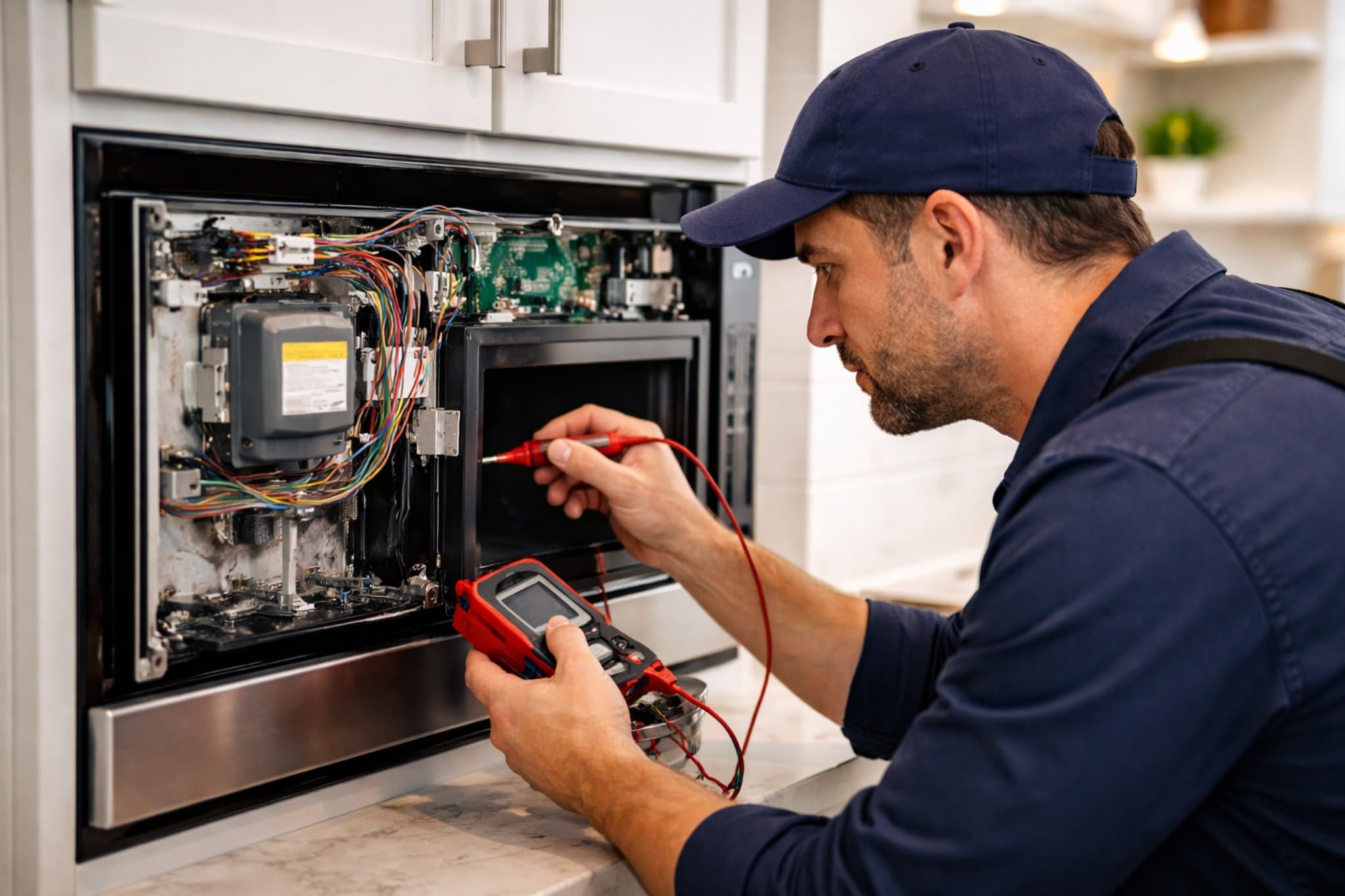
- Service
- Built-in appliances installation
- Category
- Installation & Replacement
- Coverage
- South Florida
Common symptoms
Unit does not fit the cabinet opening cleanly
The appliance may be too tall, too wide, or too deep for the existing cutout, which can affect alignment and airflow.
Doors or panels do not sit flush
Misalignment can leave visible gaps, prevent smooth operation, or create a finished look that does not match the cabinetry.
Appliance rocks, shifts, or vibrates
Uneven flooring or poor leveling can cause movement during operation and increase noise.
Utility connections are not ready
Water, power, gas, or venting may need to be checked before the appliance can be installed safely.
Replacement unit is a different model family
Even when the new appliance is similar in size, trim, brackets, or utility locations may differ from the old unit.
Repair process
1. Check the opening and model dimensions
Confirm cabinet cutout size, clearance requirements, door swing, and utility placement before moving the appliance into position.
2. Prepare the installation area
Protect floors, clear access, and verify the space is ready for safe handling and placement.
3. Set and align the appliance
Position the built-in unit carefully so it sits level, fits the opening properly, and lines up with surrounding cabinetry.
4. Connect utilities as required
Coordinate the appropriate water, electrical, gas, or ventilation connections based on the appliance type and site conditions.
5. Test operation and finish setup
Check for proper start-up, door function, leveling, and any visible fit issues before completing the job.
What built-in appliance installation includes
Built-in appliance installation is more than sliding a unit into place. It usually involves checking the cabinet opening, confirming clearance, leveling the appliance, and making sure the surrounding fit looks clean and functions properly. Depending on the appliance, the job may also involve utility connection coordination for water, power, gas, or venting.
When replacement is the right option
Replacement makes sense when an older built-in appliance no longer performs well, no longer matches the kitchen layout, or needs a safer and cleaner reinstallation after removal. It is especially important to compare the dimensions and connection points of the new model before installation begins.
Built-in appliance service for South Florida homes
South Florida kitchens often combine custom cabinetry, tight utility spaces, and premium integrated appliances that require careful handling. Local service helps account for common layout challenges, including tight clearances, humidity-related wear, and fit issues around older cabinet openings.
Maintenance tips
Frequently Asked Questions
What types of built-in appliances can be installed?
Common built-in appliances include wall ovens, cooktops, built-in microwaves, dishwashers, and some integrated refrigeration units. The exact installation steps depend on the model and the utility requirements.
Do I need the old appliance removed first?
Not always, but the area must be clear and ready for safe installation. If an old unit is still in place, it usually needs to be removed before the replacement can be set and aligned.
Can a built-in appliance be installed in the same opening as the old one?
Sometimes yes, but only if the new appliance matches the opening, clearance, and utility layout closely enough. Even small differences in depth, brackets, or venting can affect fit.
Why is leveling important for built-in appliances?
Leveling helps the appliance operate correctly, reduces vibration, improves door or drawer alignment, and supports a clean built-in appearance.
Do built-in appliances always require special utility work?
Not always, but many require careful confirmation of electrical, water, gas, or venting conditions before installation. The needed setup depends on the appliance type.
Related locations
Need built-in appliances installation support?
Use the contact route to request service, diagnostics, or to clarify whether the issue fits residential or commercial workflows.